Harbor Plaque Co · buyer guide
Packing identifiers for several docks
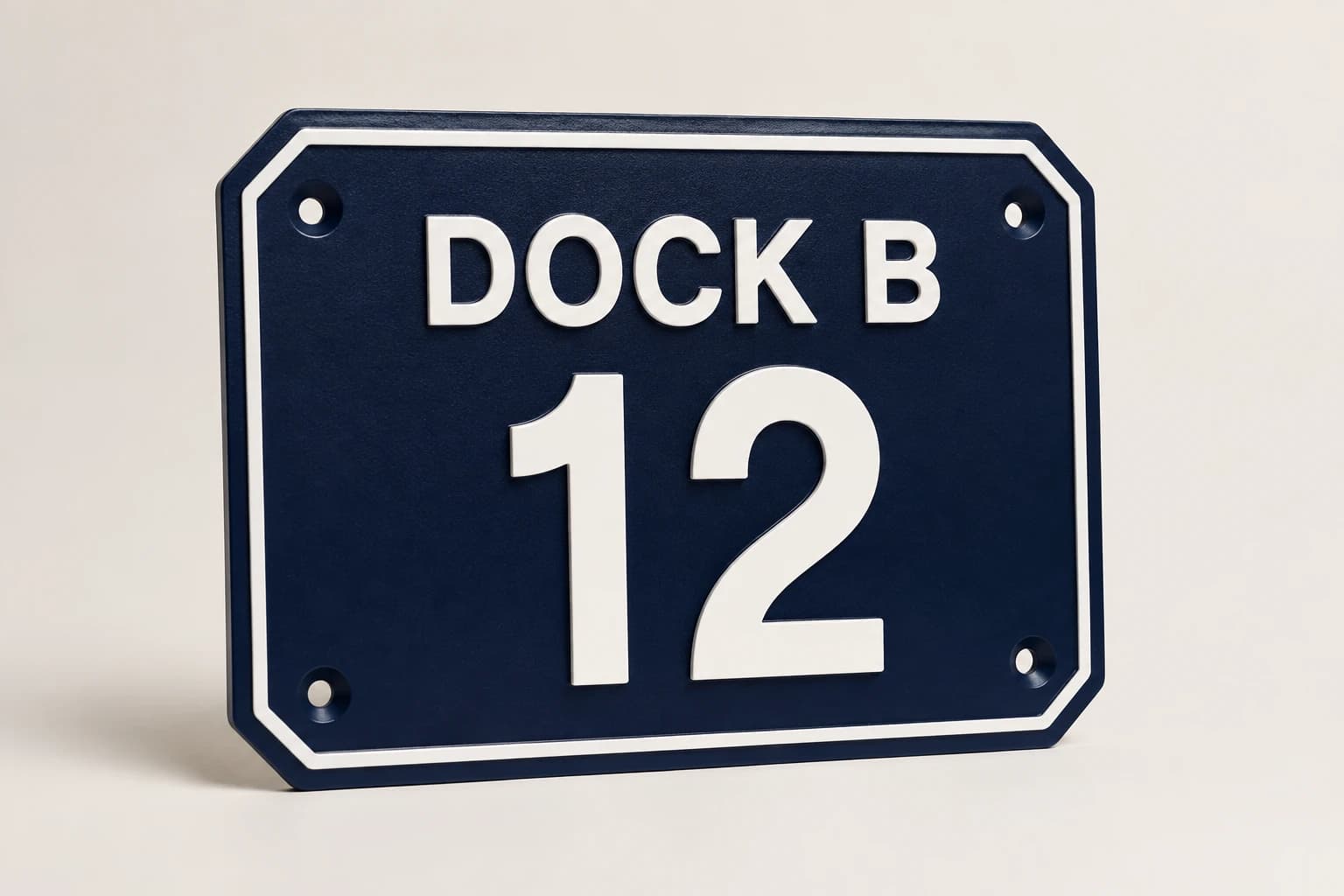
For Harbor Plaque Co worldwide orders, begin with the marina's full dock and slip references. A sign displaying 12 on two different docks can look identical while belonging to separate destinations or physical supports. The internal packing reference should preserve the full location identity even if the visible design uses a shorter approved number.
Reviewed 2026-09-05 · AI-assisted editorial review. General buying guidance; illustrative scenarios are not customer case studies. Images are AI-generated concepts.
Use one packing group per practical handoff, such as a dock or an approved work phase. Do not group solely by color or panel size if that makes distribution harder. The packing plan should help the receiving team find the right object for the right location without reconstructing the order from memory.
How do you keep text, location and quantity together?
For each group, list the approved identifier range or exact item references, piece count and physical specification reference. If the group contains mixed sizes or supports, make those distinctions visible. A total of twelve signs is not enough when only some fit the retained holders on that dock.
Use the same references as the released proof and quote. New informal names created during packing can break the connection between the correct text and its destination. If a short package label is needed, maintain a clear mapping to the full schedule rather than replacing it.

How do you separate personal vessel pieces from marina inventory?
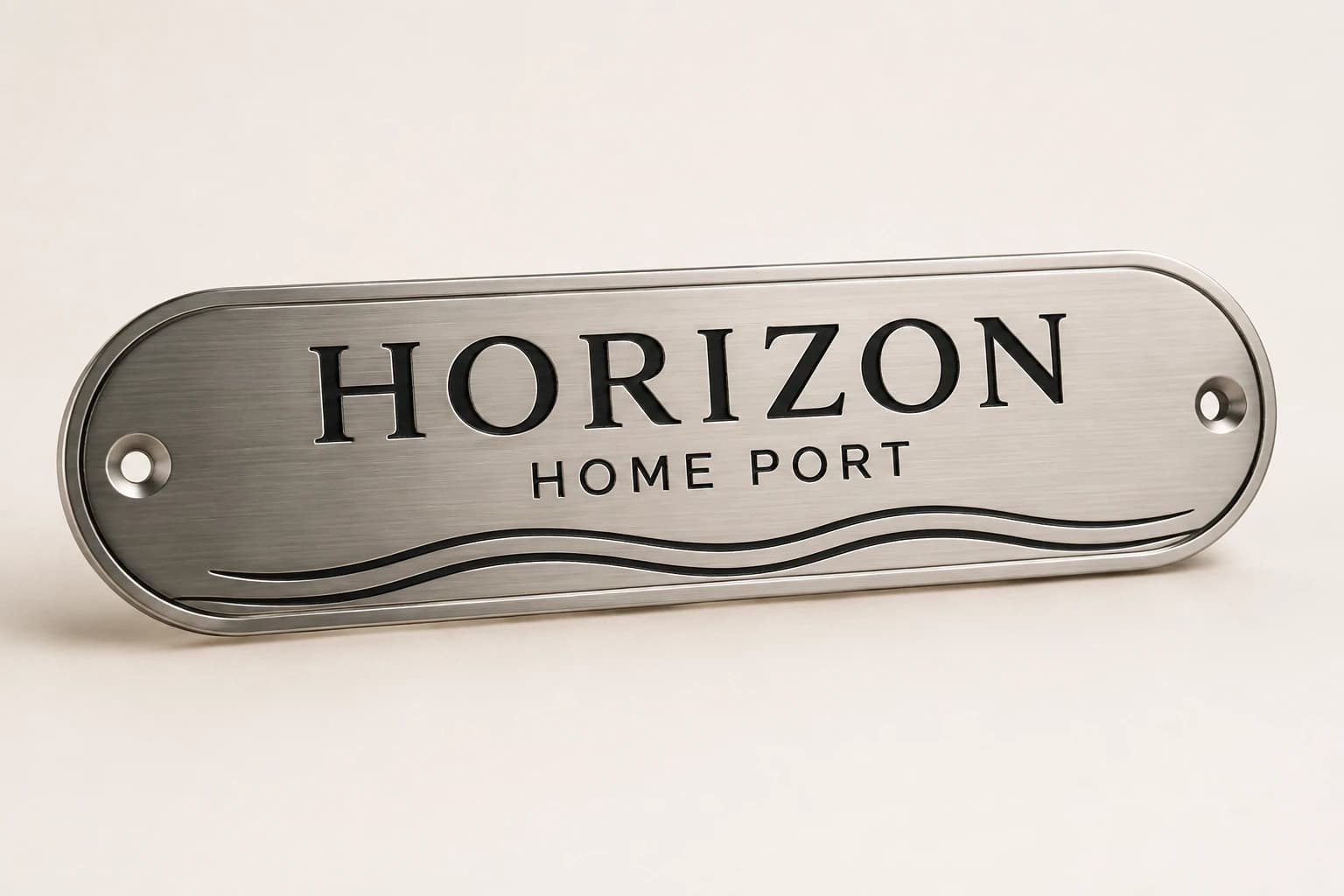
A mixed order may include stable slip identifiers and personal vessel nameplates. Keep personal requests in their own group with the authorized recipient or order reference. They should not be distributed as spare marina stock simply because they arrived in the same carton.
If a vessel owner collects a piece through the marina office, identify the handoff owner and the approved collection arrangement. Keep private contact details in the appropriate order workflow rather than exposing them unnecessarily on a public packing list. The visible identifier and the receiving contact serve different purposes.
Illustrative example: How do three dock groups and two shared signs total twenty-six?
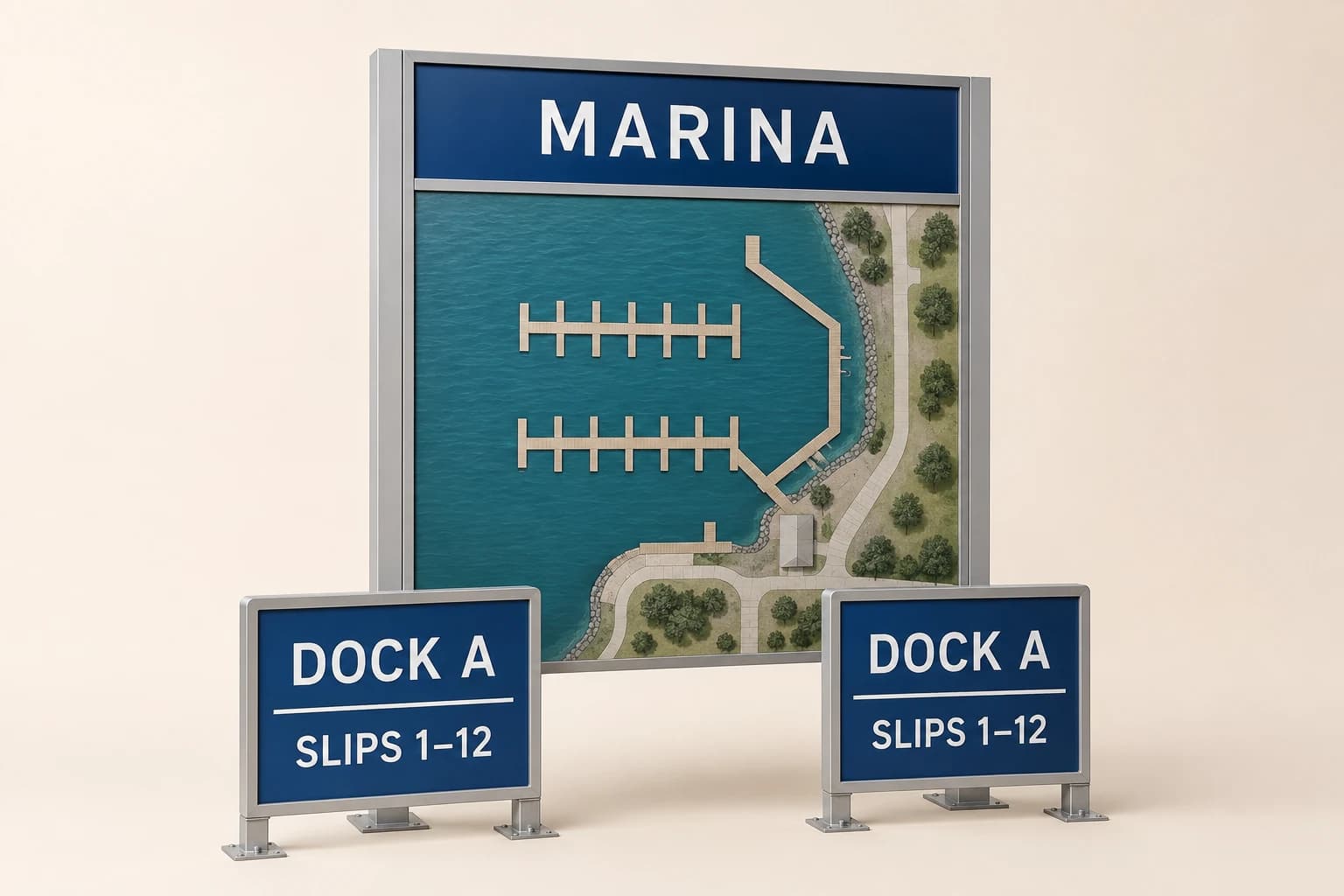
Imagine a fictional order with eight signs for dock A, ten for dock B, six for dock C and two shared-area identifiers. The total is eight plus ten plus six plus two, or twenty-six physical pieces. The bulk-tag calculator loads those four groups with one piece per listed location and no spares.
The worksheet preserves each dock group and the shared-area allocation. It does not determine how many cartons the maker should use. A single dock group may need several packages, or several groups may share an outer carton with clear internal separation, depending on the actual objects and packing proposal.
If two dock B signs are held for a wording decision, the ready-to-release quantity is twenty-four while the full proposed order remains twenty-six. Mark the held references explicitly. Do not silently remove them from the master schedule and then treat their later absence as a shipping error.
How do you ask for a packing proposal that preserves the grouping?
Tell the maker how the marina plans to move the shipment after central receipt. Ask for suitable protection and a practical grouping proposal for the actual panels or assemblies. Do not prescribe a generic protective material as though it fits every construction.
Confirm whether individual labels, internal dividers or group lists are included in the quoted scope. A request for dock-by-dock packing can add work, so make it concrete before approval. The maker should know which distinctions are essential for correct distribution and which presentation details are optional.
Reconcile identifier groups across docks
Load the fictional worked example, then replace every assumption with your approved project inputs.
Method: Multiply each entered location group by pieces per location and add explicit spares. Packing materials, carton counts and placement are separate decisions.
Build your plan
Use one row per tag type. For example: Valve labels | 20 | 2. Material, dimensions, legend text and mounting belong in the final tag schedule.
Use the article’s example files
Fictional example rows show how to separate physical quantities, wording and approval references. Replace them with your project schedule. HOLD and SAMPLE entries are not production instructions.
How do you prepare the receiving list before dispatch?
Issue a selected packing schedule showing exactly which references belong in the shipment. Keep draft or held items out of that release list while retaining them in the master plan. Ask the maker to identify the actual dispatched groups and any outstanding pieces.
The receiving team should compare the shipment with that selected list, not an earlier proposal containing every possible sign. This avoids false shortage reports and makes genuine discrepancies easier to locate. A simple expected-and-received column per dock group can be useful, with item-level detail available when similar numbers repeat.
How do you check repeated numbers and similar legends deliberately?
At receipt, verify prefixes, leading zeros and suffixes as well as the main digits. A panel can look correct at a glance while carrying the wrong dock letter. If two docks share the same visible short numbers, use the internal reference to check their physical specifications and destination.
Count each group separately before combining the total. Twenty-six pieces can still contain an extra dock A sign and a missing dock C sign. For sequential identifiers, reconcile the exact list rather than assuming a complete-looking stack contains every approved value once.
How do you record onward distribution by named owner?
Assign a person to accept each dock group after central receiving. Record the group reference, quantity and any unresolved issue. The transfer should preserve the internal labels so the person responsible for the next step can match the pieces to the approved location schedule.
Do not mark installation or placement complete merely because the group left the office. The marina's responsible process should verify the physical outcome. The packing record can support that work by showing what was handed over and where it was intended to go, without claiming a later action that has not been observed.
How do you keep partial deliveries and spares visible?
If one group ships later, maintain a remaining-items list connected to the original order. A later carton should identify its exact outstanding references so staff do not mistake it for duplicate inventory. Reconcile the full quantity only after all selected groups have been received.
Store approved spares by legend and specification, not as an undifferentiated box of extra signs. If a spare is used, update its inventory status through the marina's process. The next order can then distinguish replacement stock from a new location requirement and avoid buying pieces that are already available but poorly identified.
How do you use an exception list for similar signs with different supports?
Two dock groups may display the same short numbers but use different retained holders. Add the physical specification reference to the internal packing label so the distribution team does not treat those panels as interchangeable. A correct visible number in the wrong holder group can be difficult to detect until the piece reaches its destination.
If one group includes complete assemblies while another includes inserts only, make that distinction part of the packing summary. The expected piece count can remain simple, but the receiving owner should know which components are included. Ask the maker to identify any loose parts that must stay with a particular assembly.
When an exception is resolved after the main group is packed, issue a revised selected list rather than an informal instruction to add the odd-sized one. Identify its exact location, quantity and specification. The final dispatch record should show the item clearly so a later receiver can reconcile it without having heard the earlier conversation.
After distribution, retain the exception information in the active inventory. The next replacement order should not repeat the same ambiguity merely because the main dock group looked uniform in the original summary.
How do you keep marina delivery separate from dock distribution?
A shipment received at the marina office still needs a named owner for each dock group. Record the transfer from central receiving to the appropriate coordinator without implying that placement is complete unless the marina has verified it through its own process.
Keep any spare identifiers separate from active dock allocations. A spare panel should retain its exact approved legend and storage status. If the marina changes numbering later, review the stored pieces before using them so an obsolete identifier is not reintroduced by a routine replacement request.
Which option fits this order?
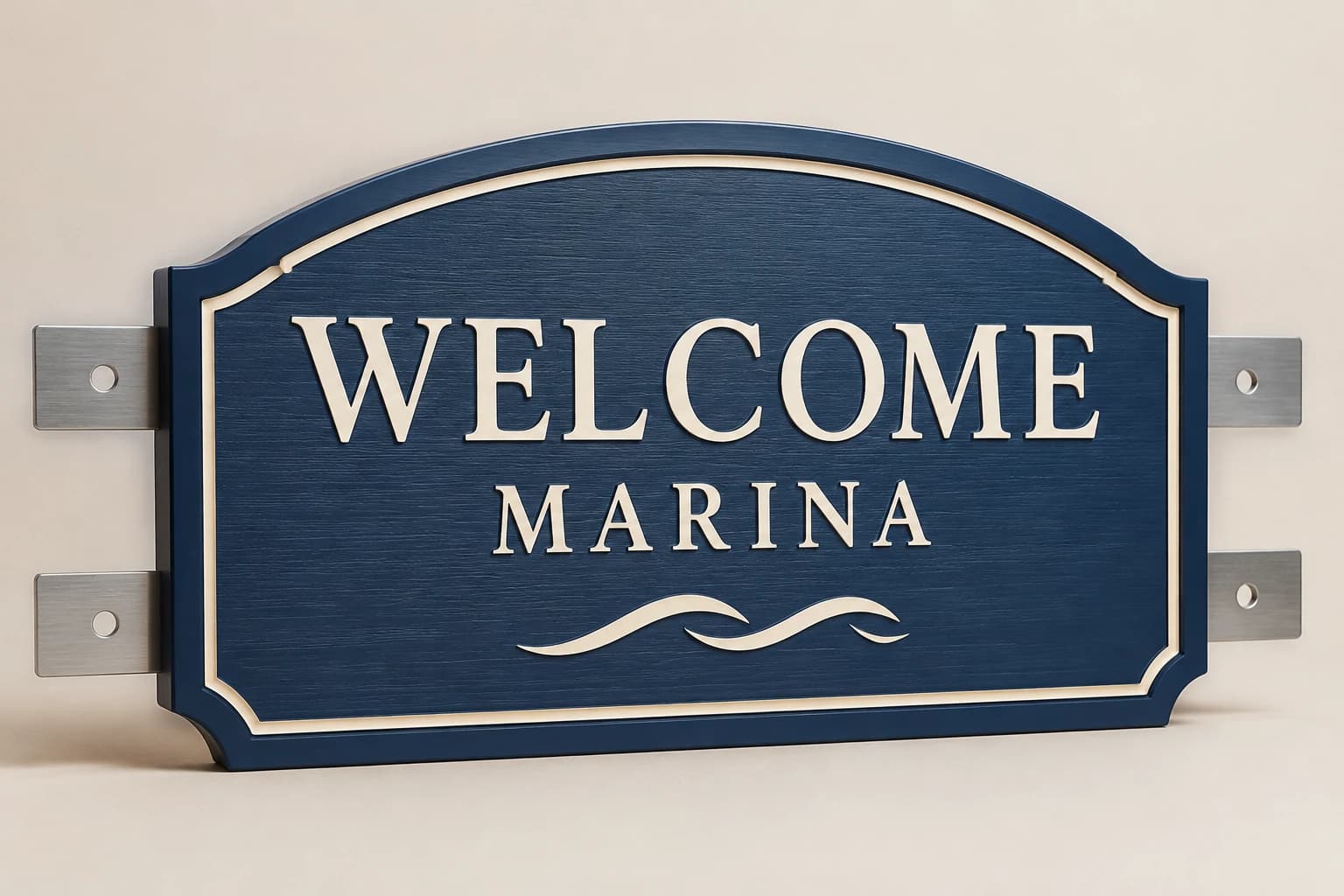
Pack dock groups, shared-area pieces and personal vessel requests according to their approved destinations and owners. The fictional groups total twenty-six signs, but that total does not determine cartons or prove correct distribution. Compare exact references and physical specifications so repeated short numbers remain distinguishable when the shipment is opened and moved onward.
| Option | Useful when | Scope to resolve |
|---|---|---|
| Dock group | A set of identifiers will be handed to one location coordinator. | Exact references, physical specification and expected quantity. Boat Outfitters identifies its dock sign construction as King ColorCore. |
| Shared-area group | Signs belong outside the ordinary slip sequence. | Separate destinations and approved wording rather than an unexplained extra count. |
| Personal vessel group | A privately requested nameplate needs a recipient handoff. | Order reference, authorized receiver and separation from marina spare inventory. |
What should buyers confirm before ordering?
Multi-dock packing should preserve the location and component distinctions in the released order. Cost depends on the actual grouping and protection requested, while receiving needs more than a grand total. These answers explain identical numbers, held pieces and onward handoffs so each approved identifier remains connected to its intended dock and support.
What can dock-by-dock packing change in the quote?
Harbor Plaque Co proposals should identify the requested internal grouping, package labels, protection and destination arrangement for the actual sign order. Separate complete assemblies and inserts where their handling differs. The piece total does not determine carton count or guarantee that custom grouping is included, so confirm the practical packing scope before comparing delivery totals.
Should every dock receive its own outer carton?
Not necessarily. Ask for a packing proposal suited to the actual objects and handling plan. Internal grouping can preserve destination clarity without assuming a fixed carton count. Confirm the proposed grouping and included labels in the written scope. The receiving team needs a practical way to preserve dock destinations after the outer carton is opened and pieces move onward.
Can the receiving team check only the grand total?
No. Reconcile each dock group and exact identifier list. A duplicate and an omission can leave the grand total unchanged. Check prefixes, suffixes and physical specification references as well as digits. The same apparent number can belong to a different dock or holder, so quantity alone cannot verify the correct distribution.
How should held signs appear in the worksheet?
Keep them in the master plan with the unresolved reason, but exclude them from the selected shipment list until they are explicitly released. Issue a focused selected shipment list with the ready references. The master plan can retain held items for later action without making the first delivery appear short against an unreleased proposal.
How should identical short numbers on different docks be packed?
Keep the full internal dock and location reference with each group, including its physical specification. Two panels showing the same short number may belong to different retained holders. The receiving team should not treat them as interchangeable based on visible text alone; the approved schedule must preserve both destination and component compatibility.
Sources and scope
The sources below support the cited technical details. The ordering workflows are editorial recommendations. Your project specification, price and schedule are established in the written quote and approved proof.
- Boat Outfitters: Custom Horizontal Dock Sign · checked 2026-09-05
Which buying guide should you read next?
All buying guidesGive the berth a stable location identity and the vessel its approved personal name, then decide which physical pieces should change when occupancy changes.
Count complete two-sided direction-sign assemblies for the order, then maintain a separate face schedule for wording and orientation approval.